Performances of Handel’s Messiah proliferate in the run-up to Christmas, even though the oratorio was originally designed for and first performed during Lent, in anticipation of Easter. The message is one of joy and redemption, but spans the whole of Christ’s life from the prophecies of his birth, through his life and crucifixion, to the resurrection and beyond.
Conductor Graham Abbott followed the original orchestral makeup of Messiah, as it was first performed in Dublin in 1742, with harpsichord and organ providing the continuo parts alongside the string sections, two oboes, bassoon, two trumpets and timpani. Abbott conducted the choir and orchestra with athletic enthusiasm and finesse, eliciting a fine performance from all parties. He opted for a Baroque restraint, particularly in the string section, where short bow strokes and minimal vibrato were the order of the day.
Behind the pared-down MSO were the serried ranks of the Melbourne Symphony Orchestra Chorus (formerly the Melbourne Chorale). Abbott maintained a fine balance of volume between the orchestra and the choir, trained by chorus master Jonathan Grieves-Smith. The chorus sang with constant attention to diction and dynamics, with clean phrasing and emotional restraint. The audience responded with quiet attention and stood in the tradition way for the Hallelujah chorus.
The four solo singers all had distinctive qualities. Tenor Benjamin Rasheed took the first solo, setting the mood for the night with Comfort Ye, sung in warm and soothing tones, projecting out into the hall and relishing the acoustics. Rasheed did not reach these heights again, perhaps because he tended to lower his head to the book, but it was a memorable performance. Counter-tenor David Hansen, who sang the alto role in the Baroque tradition, had a masterful technique and angelic higher register. Soprano Sara Macliver also had the power to raise our hearts with her high notes, especially in her rendition of How beautiful are the feet. Baritone Douglas McNicol’s voice was authoritative, channelling the wrath of God, but handled the tricky runs, especially the triplets in Why do the nations, with aplomb. The orchestra succeeded in accompanying him in this song in a whisper of fast strings – no mean feat.
The energy of the performance of this uncut version of Messiah was sustained to the end with perfect balance, seamless continuity and great dynamic range. The hushed tones of the chorus in Since by man came death were breath taking and in contrast to the joyous proclamations of eternal life, leading into the glorious The trumpet shall sound played by guest trumpeter Mark Fitzpatrick, with enough conviction and clarity to raise even the unbelieving from the dead.
Melbourne Symphony Orchestra
HANDEL’S MESSIAH
Venue: the Arts Centre, Hamer Hall
Date/Time: Friday 19 and Saturday 20 December 2008 at 7:00 pm
Bookings: www.mso.com.au or 1300 136 166
Melbourne Reviews
Handel's Messiah | MSO
- Details
- Carol Middleton
Most read Melbourne reviews
Heathers The Musical
Capturing the essence of its predecessor, Heathers The Musical is an absurdly comic production that doesn’t just walk the line of polite society but plans to blow it all up with reckless abandon.The Glass Menagerie | Melbourne Theatre Company
This Glass Menagerie is top shelf, and while blessed with an extraordinary cast and the highest of production values, it will not meet with everyone’s measure of how this play should be staged.
Swan | Elf Lyons
Quirks of the source – and of the environment that sustains it – are cleanly exposed in a high-energy hour of physical comedy, delivered with moments of avian grace.
Retrograde | Melbourne Theatre Company
The script is based on a true story, although this dramatisation can feel somewhat contrived, with important assertions not interrogated, and credibility stretched as a result.
The Brut Truth: A Champagne Comedy Tasting | Prétentieux vin Branleur
It feels that the show hasn’t quite worked out what point it wants to make.
More from this author
Dying: A Memoir | Melbourne Theatre Company
Cory Taylor’s final book Dying: A Memoir was a surprise hit world-wide. Now the stage vers...
Now playing Melbourne
| Waitress |
| The Big Chillout |
| Good Company Entertainment Presents: The Big Chillout |
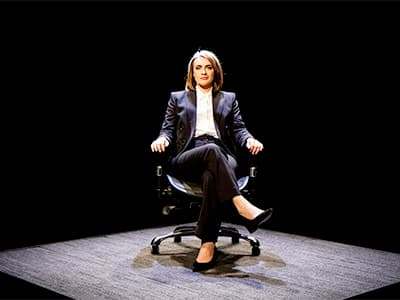
Suzie Miller’s award-winning one-woman play, Prima Facie returns to Melbourne for a limited season.
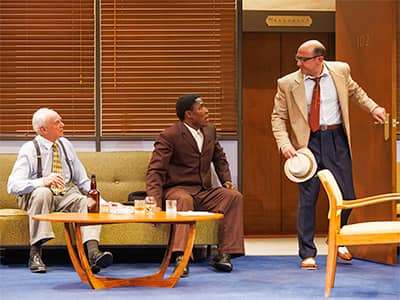
The script is based on a true story, although this dramatisation can feel somewhat contrived, with important assertions not interrogated, and credibility stretched as a result.